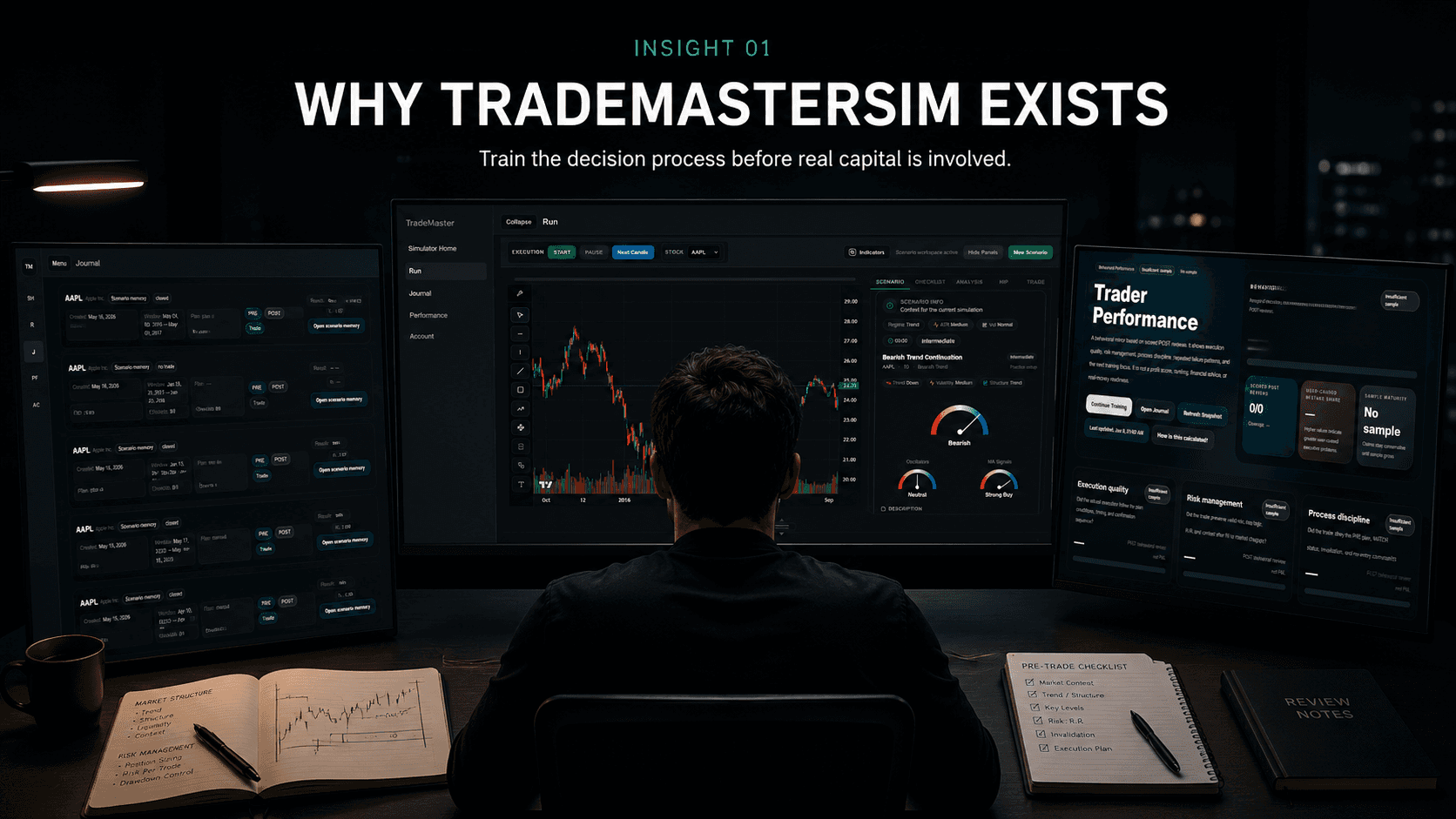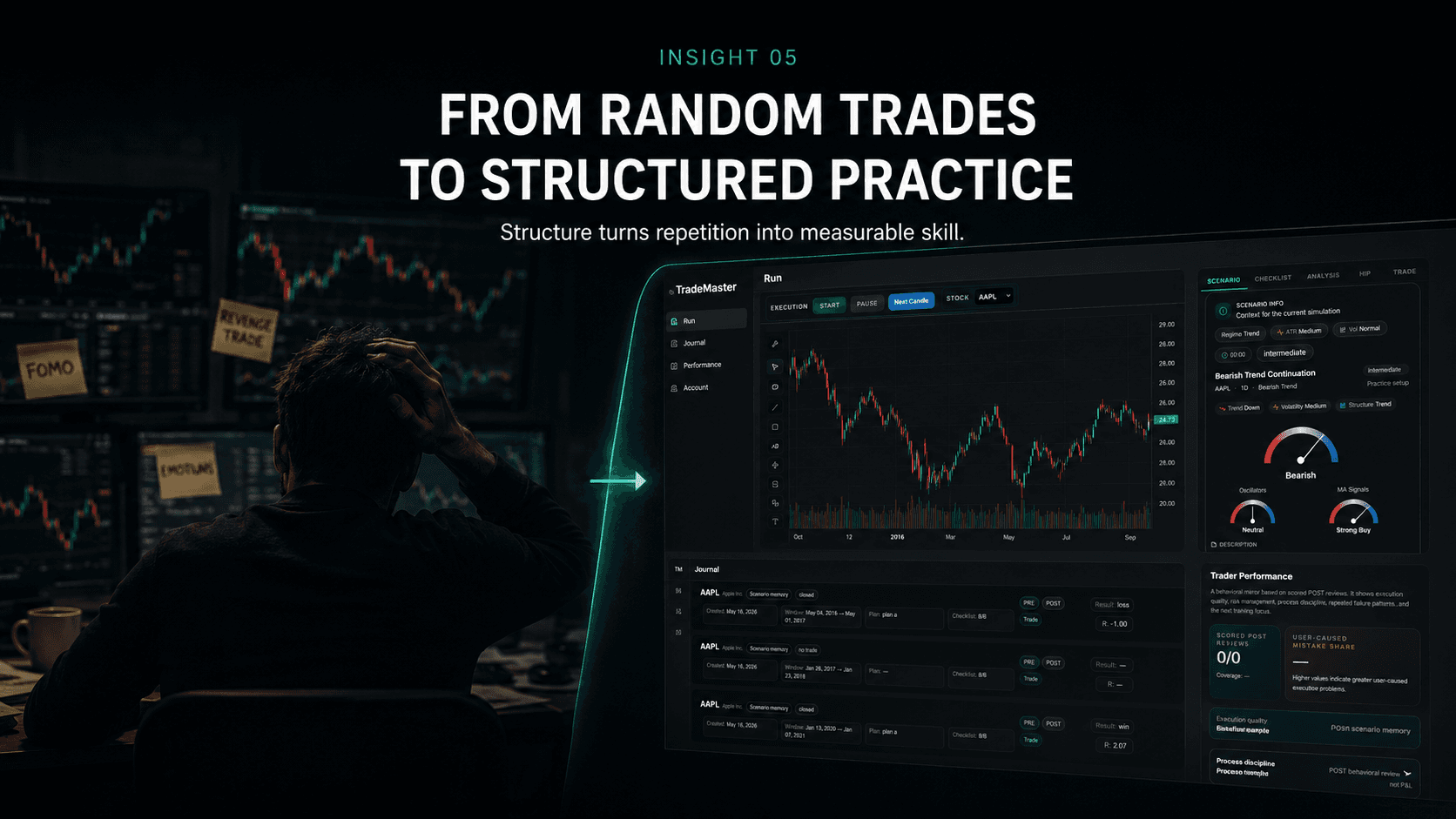
A trading journal is useful, but it has one weakness that many beginners notice too late: it is usually written after the emotion of the decision has already passed. By that point, the user often remembers the trade through the result. A decision that felt uncertain in the moment may look obvious afterward. A rushed entry may be explained away. A missed plan may become a short sentence instead of a clear lesson.
That does not mean journaling is bad. It means journaling needs context. A note is stronger when it stays connected to the scenario that created it: what the user saw, what they prepared, what the checklist looked like, what they acted on, and what they reviewed after the simulated outcome. Without that context, a journal can become a collection of conclusions. With that context, it becomes a learning record.
TradeMasterSim is built around this difference. The product is not only trying to give users a place to write notes. It is trying to keep the learning artifact attached to the full training loop: scenario practice, preparation, simulated execution, POST review, journal memory, replay, and performance-intelligence surfaces. The value is not in one perfect note. The value is in seeing how the decision was made.
This matters because the small details are often the details that change the lesson. Did the user have a plan before acting, or only after the result? Was the decision connected to evidence, or was it a reaction? Did the same type of mistake appear in more than one scenario? These are not market predictions, and they are not trading instructions. They are process questions. A good simulator should help make those questions easier to inspect.
Replay memory is the second part of the story. When users can return to previous scenarios, they can compare what they believed at the time with what they understand later. That is difficult to do with isolated notes. It is much easier when the scenario, review, and journal record live together. This is where a simulator can teach details that theory alone usually does not show.
TradeMasterSim is still an educational system, not a broker, signal service, or financial adviser. Its purpose is to help users practice and review the process more clearly. For the product story, read why TradeMasterSim exists. For the execution gap, read strategy is not execution. For the current product direction, visit About TradeMasterSim.